


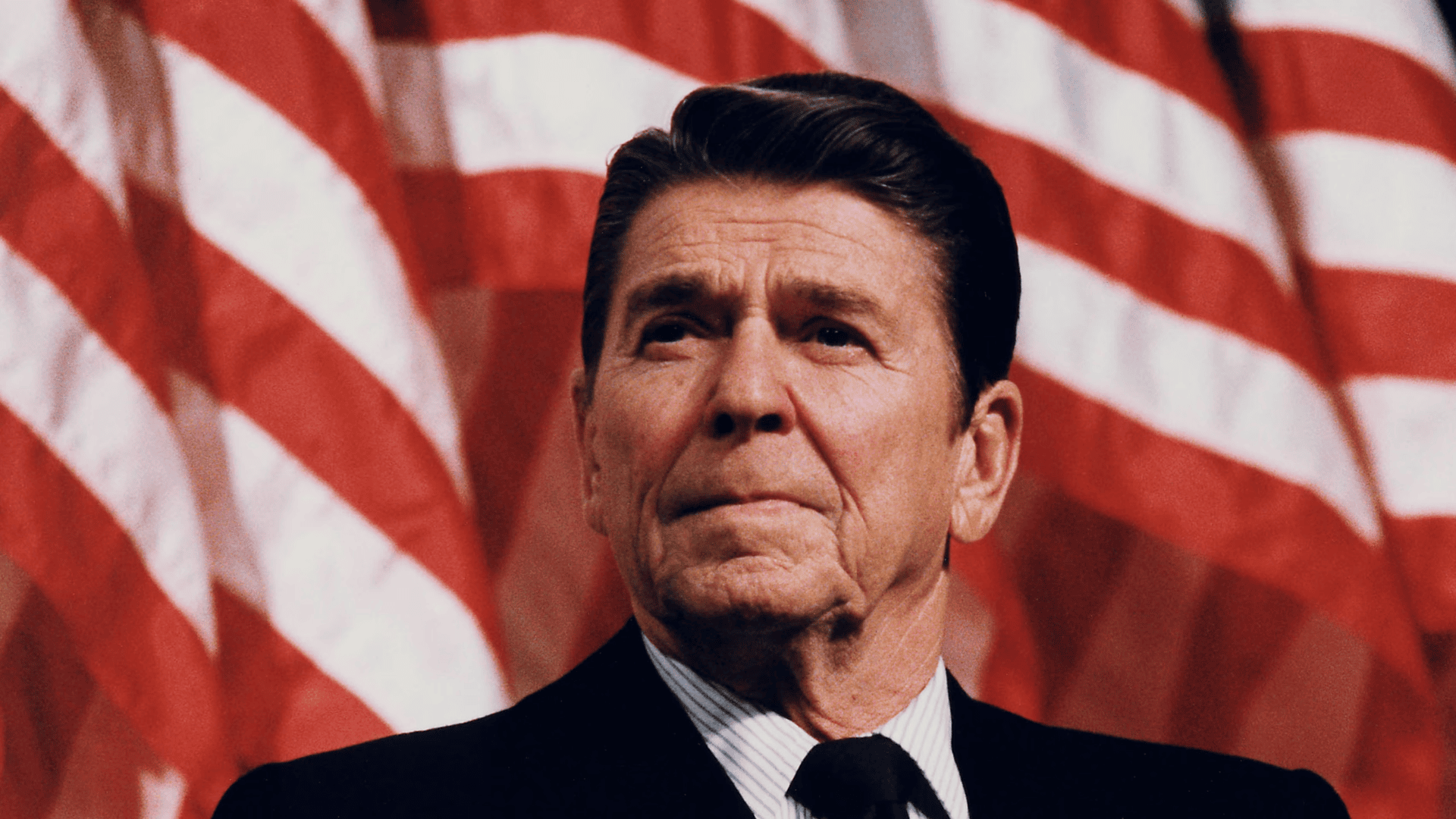
A Political Marketing Campaign.
The 1984 presidential election marked the history of the United States of America. During his first term, Ronald Reagan implemented programmes to cut social welfare support, which had a significant impact on most of the population. In this context, the Democratic Party believed it would be able to defeat the President’s bid for a second term.
However, the Republican candidate ran in the election without defending his unpopular policies, instead leading a campaign strongly driven by the construction of his image. Ronald Reagan realised that the country’s confidence had been affected by several crises that took place in the 1970s and therefore relied on a message that assured that the United States had regained its position as the natural leader of the free world.
Although the facts contradict the ideas that were intended to be conveyed, the American people clung to the messages they wanted to hear rather than the truth of the facts. As a result, by basing his campaign on a rational and objective message, the candidate Walter Mondale suffered the greatest electoral defeat ever.
After the economic growth witnessed following the end of the Second World War, the United States went through a period of economic stagnation in the 1960s and 1970s. On the one hand, the war in Vietnam humiliated the world power to the status of the defeated, which contributed to lowering confidence in the country’s economy; on the other, the Watergate scandal, which led to Richard Nixon’s forced resignation in 1974, kept Republicans out of power until 1980. In between, there were two years of the Ford administration and four of the Carter administration.
Ronald Reagan’s election to his first presidential term in 1980 marked the end of the period in which Democrat Jimmy Carter was in government. The main reason for this succession was that Americans believed Carter was ineffective in dealing with the nation’s problems. Reagan repeatedly asked Americans whether they thought they were better off in 1980 than in 1974. This approach proved very effective, aligning with the ideological model of the American dream.
During this first term, many social reforms (dubbed liberal welfare assistance programmes) implemented by his predecessor were abandoned, namely in the areas of human rights, workers’ rights, gender equality, education and environmental policies.