


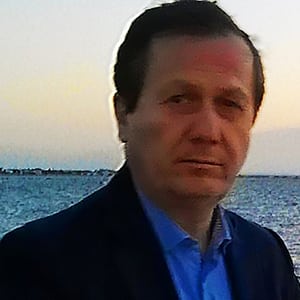
From an early age linked to medicine, Rui Santos Ivo built a career from Pharmacy to Medicine, from Law to Economics, among other areas, which allowed him a 360º vision. Today the AESE Alumnus of PADIS – Senior Management Program for Health Institutions, is President of INFARMED, an institution he joined in 1993. Leader of several entities and projects at national and international level, he recalls the virtue of preserving “intellectual humility”.
What are the main milestones in your academic and professional career, which contributed to reaching the position of President of INFARMED?
In 1987, when I graduated in Pharmaceutical Sciences, I thought I would return to my origins, but fate wanted the University to open up other perspectives for me. My involvement in the Students’ Association (AEFFUL) and in so many other initiatives, from the Lisbon Academic Association to the international associations of pharmacy students – at the time, the European Committee of Pharmacy Students and the International Federation of Pharmacy Students (IPSF) – quickly opened my horizons and I started to want to have a broader perspective of the profession, that could help build the system that revolves around the medicine. This diverse and rich period, both nationally and internationally, allowed me to get involved with a diversity of subjects, from Pharmacy to Medicine, from Law to Economics, from Agronomy to Técnico, and allowed me to create ties with many of today’s protagonists at national and international level, and, therefore, influenced my path in an indelible way.
My professional career began in Hospital Pharmacy, having joined the Egas Moniz Hospital (now part of the CHLO), in 1987, after my internship in workshop pharmacy (Sanex Pharmacy, in Lisbon) and in hospital pharmacy (Civil Hospitals of Lisbon, having worked at the still existing Hospitals of São José, Capuchos, Santa Marta and Curry Cabral, now part of the CHULC). And it is as a hospital pharmacist that I feel. It’s my base, my matrix.
But, it is true, that all these experiences “pulled” me to look for that helicopter view, of 360º. Moving to the regulatory area came as natural. We must not forget that, in 1984, the Directorate-General for Pharmaceutical Affairs had been created; in 1986, Portugal joined the then EEC and, in 1991, it became covered by European pharmaceutical legislation (after 5 years of derogation). In 1993 INFARMED was created, so here arises the unique opportunity to start a career that combines my training base with my knowledge that I had acquired from my experiences at European and international level. That is how, on the eve of the creation of the European Medicines Agency in May 1993, I joined INFARMED, at the same time as my colleague Sofia Vassangi. Since then, my career has been predominantly that of regulator, at national or European level, shared with the activity of Invited Assistant Professor at the Faculty of Pharmacy of the University of Lisbon since 2009.
Throughout his professional career, there are several achievements that we can highlight. From 2002 to 2005, he was a member of the EMA’s Management Board, and was also the first chair of the Coordination Group of Medicines Authorities of the European Union.
What were the main achievements achieved over the years?
These functions arise, in large part, from my previous career and it was a great privilege to hold such positions, for which I had the support of my European colleagues. From the European Commission, to the European Medicines Agency (EMA) and the various national agencies, it was a very stimulating period, of great construction, with the great enlargement of the European Union to the former Eastern Europe, to the great revision of European pharmaceutical legislation. We have led many projects, for example, the creation of a European database of medicines, cooperation in the area of prices with the WHO, the creation of the Coordination Group of Agencies… which I had the honor of chairing as the first chair.
Likewise, I highly value the professional challenges that have been posed to me in the field of Public Administration. In addition to my career, which essentially passed through this house (INFARMED), I had the opportunity to preside over the Central Administration of the Health System.
What are the main lessons you took from these experiences, which make you the leader you are today?
I have known realities in other countries, and without wanting to ignore the shortcomings and difficulties that our NHS faces, I have to underline the level and service of the Portuguese NHS and the evolution it has had in patient care, but also in its organizational development. For example, in terms of information systems and data sharing, the level we have reached in Portugal rivals the whole of Europe at top levels. Having this perspective is important because we tend to minimize the good we do, and only underline the bad that happens.
Above all, what I want as a professional is to be able to better serve my country and for our health institutions to provide the best public service to my fellow citizens, both at national and European level. And this permanent search was present in all the activities and projects I developed, in the positions I held, and in what I tried to stimulate in my teams.
My path has helped me a lot to have diversified horizons, and therefore to have an open and collaborative perspective, a posture that I try to instill in my colleagues and collaborators.
What values do you govern yourself by and that you transmit to your teams?
It is increasingly important that, along with a solid training base, you seek to obtain the other skills of adaptability and social networking . A professional will never be complete if he does not combine technique with humanity. With regard to values, I would highlight team spirit, autonomy, leadership skills, and the willingness to innovate. An incessant search for results and the concrete, based on loyalty and professional ethics.
In the reality we currently live in, with new challenges and difficulties, it is essential to ensure the cohesion of the teams and I try to be attentive to the well-being of the people we work with. Fortunately, I have been lucky to work with competent professionals who simultaneously seek to play an active role as Public Health agents. I highly value the posture of self-responsibility, autonomy, and adherence to the principles of the institutions in which we find ourselves.
It seems particularly important to me to recognize the strong contribution that all the professionals who work at INFARMED have made so that, in a time that is particularly difficult and demanding, it is possible to guarantee our fellow citizens the provision of adequate health services.
If you could go back in time, what would you do differently?
Being an impossibility, the important thing is to understand if the choices we make can have better bases for future decisions, that is, it is important to make the decision process as robust as possible, in order to choose the best options, according to the scenario we are facing. Obviously, after making a certain decision, we can always think that we could have gone another way, but not having all the answers in advance, it is important to be surrounded by employees who are an asset in their areas of intervention and who can provide that support. In relation to Infarmed, this is what happens, with employees having a level of knowledge of excellence, which makes the moment of decision, not easier, but with greater and better information. However, you will never hear me say that I would not have done differently with different information. I think we should preserve that intellectual humility.
Professionally, how do you see yourself in 5 years? Do you feel that there is still a lot to do as president of INFARMED?
I would say that at the moment it is quite difficult to make 5-year forecasts. The world is constantly changing and the pandemic has changed many realities. In the same way that it was not possible for me to predict that in this mandate as president of INFARMED we would be facing a pandemic of this dimension, it is not easy to predict my professional future. At the moment, my focus is to contribute so that we can meet the objectives we have set for this mandate, while responding to the new challenges that have arisen. And these are, of course, in the first line: to respond to what our fellow citizens need from us.
When we started the mandate, we mainly wanted to be as close as possible to all those who are the recipients of our services, responding to the needs of each one, promoting access to medicines and contributing to the sustainability of the NHS. However, with the emergence of the COVID-19 pandemic, we had to adapt some of the priorities we defined, as it became a priority to contribute to the best possible response to the fight against this devastating virus, namely with regard to therapeutics and vaccines and the combination of evidence to support political decision-making.
Now I am sure of one thing: there is always a lot to do and, above all, for those like me who feel enormous motivation to contribute very directly to the service of citizens. So, whatever the next five years hold, you can count on me to continue on that path.
How has COVID-19 changed the priorities you set at the beginning of your mandate? How is INFARMED reacting to this new reality?
The impact of COVID-19 challenged us to seek and find innovative solutions to the new needs of the health system, and the NHS in particular, and, in this sense, immediate and innovative measures were taken to effectively respond to the needs of patients and their caregivers.
The crisis generated by COVID-19 has also reinforced joint action by the European institutions and between the Member States, which have triggered combat and support mechanisms at various levels. The process of acquiring vaccines for COVID-19, in Portugal and throughout the European Union, stems from a concerted strategy at European level, aiming to ensure equitable access to all citizens, which has necessarily passed and continues to include European support for the development and production of vaccines and thus ensure the availability of safe and effective vaccines.
INFARMED has developed its work together with the European Medicines Agency and the Agencies of the other Member States, but also in alignment with the Ministry of Health and other national entities. We are overcoming a year with numerous challenges, which are not exclusively about managing the COVID-19 pandemic.
All this implied a very important ability to adapt, from technology to people, with teleworking being the way to respond to our activities. I can say that our Information Systems services and our more than 350 workers knew how to assume the new “normal” and give the best response, also assuming the commitment to a daily life always marked by unpredictability.
And what are these other challenges to which you refer?
I can elect the Portuguese Presidency of the Council of the European Union, with sustainable, equitable and universal access to medicines being one of the priorities. This priority entails addressing the challenges of sustainability, availability and affordability in the medicines sector, and represents a European and national concern.
Also during this challenge, we will organize, in April, a High-Level Conference to discuss and deepen the issue of the availability of medicines, associated with other major current issues such as accessibility and sustainability.
These are unavoidable themes in the present and in the near future, made more evident by COVID-19: the availability of medicines, medical devices, access to medicines, and the assessment of health technologies.
And of course, assuming the principle that any crisis brings opportunities, we must, at the appropriate time in the near future, evaluate this experience and learn the appropriate lessons.
For those who, like me, have dedicated themselves to the regulation of health and medicine throughout their professional activity, I am especially interested in looking at the changes that what we have learned or had to learn brings us.
Collaborative experiences, the need for rapid adaptation, new ways of evaluating medicines, major changes in their development and approval process, the role of health data platforms, are facts that we must discuss.
And what a Europe of health we can have, when such an area is up to the Member States, but the pandemic has shown that if we know how to do it, there is a great added value in having Europe for all.
And, of course, politics and society will be different. I wish they were more citizen-oriented, for all of us.
As I recently said, “what the emergency has brought together, should not be wasted”.