

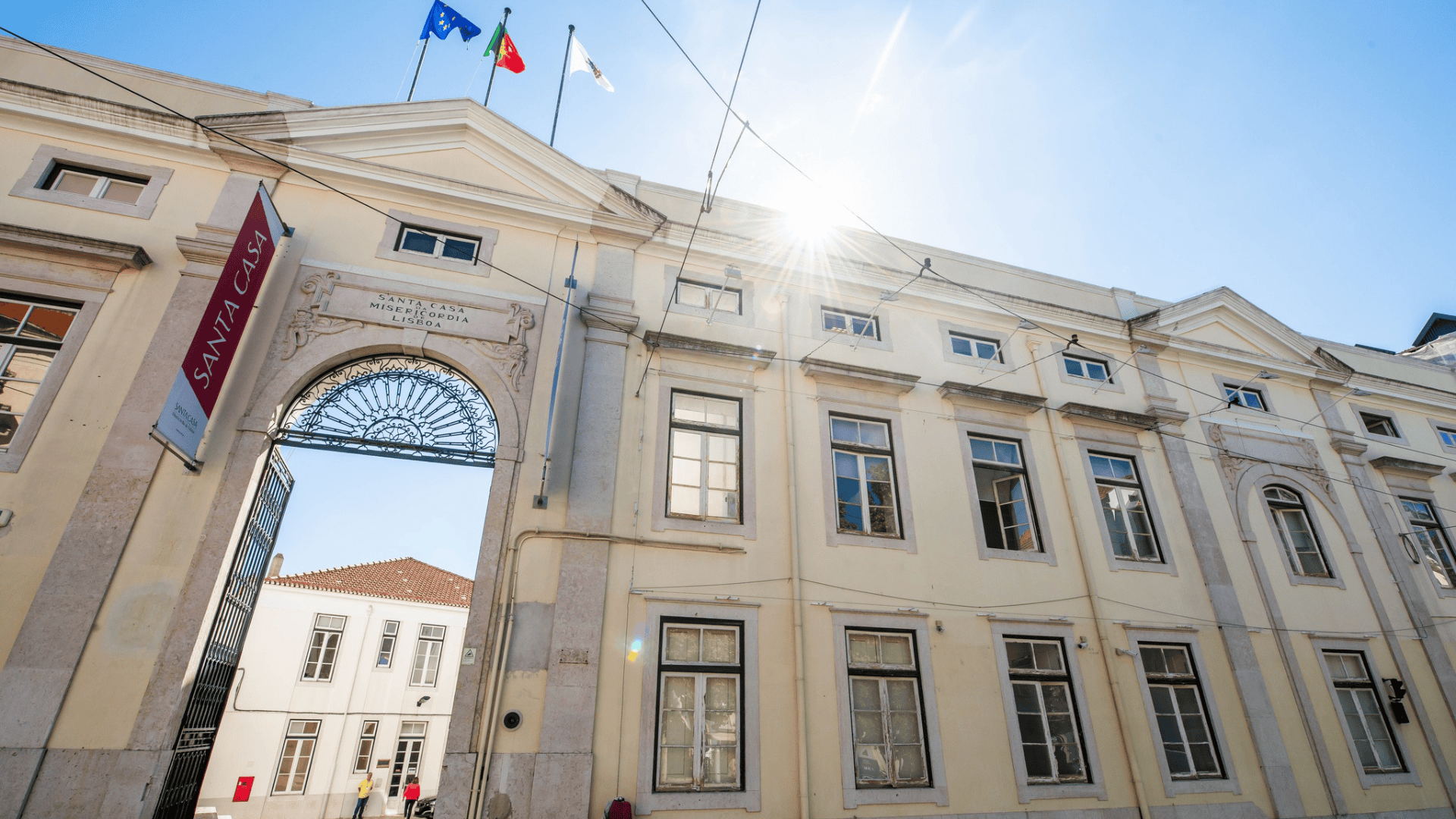
Santa Casa da Misericórdia de Lisboa (SCML) was founded in 1498 by Queen Regent D. Leonor, with the guidance of Friar Miguel Contreiras and the support of one hundred “faithful and good Christians,” with the purpose of addressing health and welfare issues in the city of Lisbon. The institution was governed by a “Commitment” that established the fourteen works of mercy that the “brothers” were to practice: teach the ignorant, give good counsel, bring those who err back to the right path, console and comfort the sorrowful, forgive those who offend, suffer injuries with patience, pray to God for the living and the dead, visit prisoners and the sick, care for the infirm, clothe the naked and feed the hungry, give drink to the thirsty and shelter to the poor and pilgrims, and bury the dead.
Following the establishment of the Misericórdia de Lisboa, other misericórdias were created in other cities and Portuguese possessions, such that by 1599 there were already 51 foundations. These institutions originated in Italy in the early fourteenth century, where they focused on civil protection and medical transport, whereas in Portugal they concentrated on activities related to health and poverty (in 1995 there were 387 misericórdias in Portugal and 950 in other Portuguese-speaking countries).
In 1543, SCML was entrusted with the responsibility of assisting foundlings, and in 1564 with the administration of the Hospital de Todos-os-Santos; with the earthquake that struck Lisbon in 1755, fire destroyed many of the Misericórdia’s facilities. In 1768, King D. José donated the Casa Professa de S. Roque to serve as the headquarters of Santa Casa, and in 1783 Queen D. Maria I granted it the operation of lotteries, so that it could meet the expenses related to health and social welfare. Until 1834, the administration of SCML was carried out on a voluntary basis, until in that year the administrators became royal appointees.
In 1923, it began administering the Hospital de Sant’Ana, a sanatorium created in 1904 by Mrs. D. Cláudia Chamiço and donated to SCML in 1911; the hospital’s financial crisis necessitated a change in its management, although it always maintained a certain degree of autonomy. After the Carnation Revolution of 1974, the hospital became part of the Ministry of Health, but in 1980 it returned to the Misericórdia itself. Also in 1964, the Centre for Rehabilitation Medicine, built in Alcoitão with resources from Totobola, which had been administered by SCML since 1961, became part of SCML. In 1985, it began administering Totoloto and its profits.
SCML is a legal entity of administrative public utility, according to the statutes approved by decree-law in 1991. The governing body is the board, consisting of: provost, vice-provost, and three adjuncts appointed for three-year terms. The provost is appointed by joint order of the Prime Minister and the Government members exercising oversight, and the remaining members by order of those responsible for oversight. In 1995, SCML’s budget amounted to 18,810 million contos and its workforce consisted of 4,820 people.